Halloween Walks and Foot Blisters: How to Protect Your Feet
Oct 26, 2026
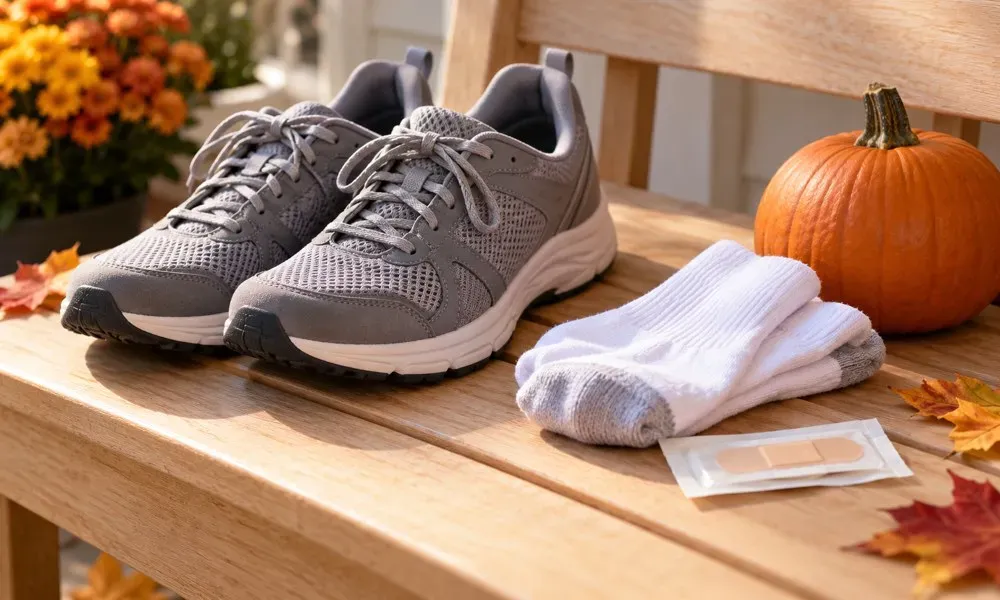
Halloween walks can involve more time on your feet than you expect. A familiar neighborhood route may turn into several extra blocks, and costume footwear may not feel the same after an hour. Planning for your feet helps keep the outing enjoyable for adults and children alike.
Plan the walk before choosing the shoes
Choose familiar walking shoes that fit securely without squeezing. Wear socks that manage moisture, and check that seams or costume accessories do not rub. Avoid making a long outing the first test of a new pair. Bring a comfortable backup option if your costume includes footwear you rarely wear.
Think about the route, not just the starting point. Include a shorter way home, places to pause, and a plan for anyone whose feet become uncomfortable. Children may focus on the next house rather than mention a sore heel, so make a quick shoe check part of a break.
Respond to rubbing early
A hot or irritated spot is a reason to stop and adjust your footwear. Continuing to walk through friction can turn irritation into a blister. Check for a folded sock, loose heel, or pressure point. A protective soft dressing may reduce rubbing, but adding layers should not make the shoe tighter.
If a blister has already formed
Protect it with a clean, loosely applied bandage and avoid the activity or footwear that caused it. Do not routinely pop it or peel away its protective skin. If it opens, gently clean it and keep it covered. A large, very painful blister or one with increasing redness, pus, swelling, or pain needs professional advice.
Bring up recurring blisters at an appointment. Repeatedly treating the same spot without addressing the pressure may leave you dealing with the same problem on the next outing. Your clinician can assess the skin and discuss the role of footwear and foot shape.
Extra care with diabetes or poor circulation
Reduced sensation can make a blister easy to miss, and reduced circulation can slow healing. Check your feet rather than relying only on discomfort. If you have diabetes, contact your care team promptly about a new blister or skin break. Avoid home draining or cutting. Ask for individual guidance if you have poor circulation or a history of foot wounds.
Questions patients ask
Should I wear two pairs of socks?
Extra cushioning is useful only if the shoe still fits. Two pairs that crowd your toes can create another pressure problem. Try your intended combination before a long walk.
Can I keep going if the blister is small?
Size alone does not determine what is safe. Protect the area, reduce friction, and change the plan rather than repeatedly aggravating it.
What should I bring to an appointment?
Bring the shoes and socks involved, describe how far you walked, and explain whether this has happened before. Mention diabetes, circulation problems, or reduced sensation when arranging care.
Foot care in Plano
If recurring blisters or a sore spot are limiting your activities, request an appointment with Restore Foot & Ankle Specialists in Plano. Our wound care and general podiatry services provide information about available care. Seek urgent care for rapidly spreading redness, fever, or feeling ill with a foot wound.
This article provides general education, not an individual diagnosis.