Traveling With Diabetes? A Foot Care Plan Before You Leave Plano
Nov 20, 2026
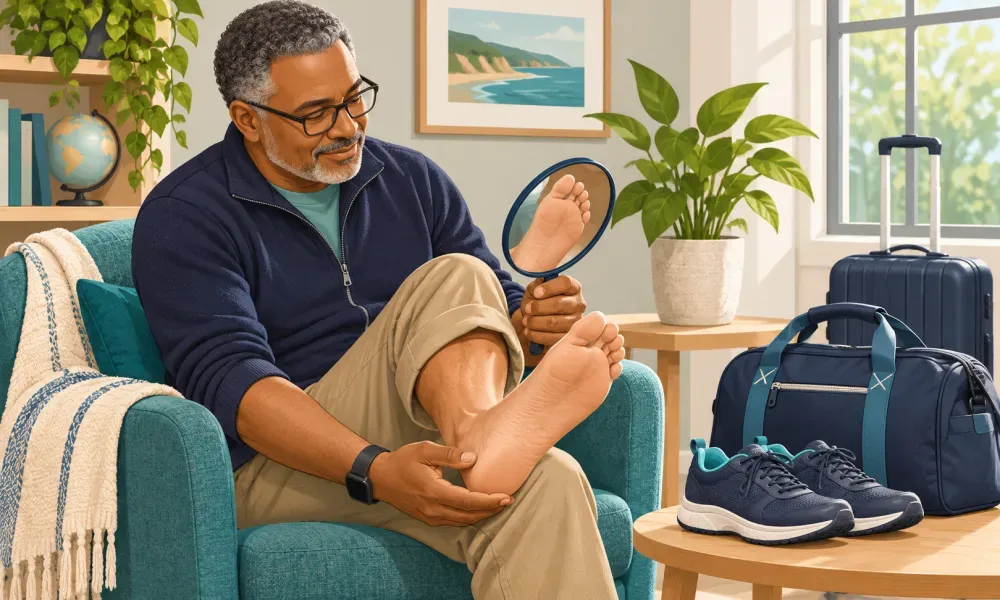
Holiday trips change more than your address. A long walk through an airport, unfamiliar shoes at a family gathering, and an evening away from your usual routine can make foot care easier to overlook. If you have diabetes, add a foot care plan to your travel preparations.
Before you pack
Diabetes can reduce sensation in the feet and affect circulation. A blister may not hurt as much as you expect, and a small injury can become harder to heal. Check your feet before leaving, especially if you have a history of ulcers or reduced feeling.
Pack well-fitting shoes you have already worn comfortably, clean socks, and the foot care supplies recommended by your clinician. Look inside your shoes for rough areas or objects before putting them on. A trip with long walking days is a poor time to discover that a new pair rubs.
If you already have a wound, a prescribed boot, or limits on walking, discuss the itinerary with your treating clinician. Ask how to manage dressings, activity, and follow-up while away. A travel plan should fit your existing care plan.
Keep your daily check on the itinerary
Choose a reliable time, such as when you remove your shoes each evening. Look at the tops, soles, heels, and spaces between the toes. Check for blisters, broken skin, redness, swelling, or drainage. Use a mirror or ask someone you trust if you cannot see the entire foot.
Keep feet clean and dry, including between the toes. Apply moisturizer to dry skin, but avoid putting it between the toes. Do not walk barefoot in a hotel room or unfamiliar home. Avoid heating pads and hot water on feet with reduced sensation.
Keep your diabetes supplies accessible and plan ahead for changes in meals, activity, or time zones with your diabetes care team. Foot care is one part of travel preparation, not a replacement for your overall diabetes plan.
Know when the trip needs to wait
Contact a clinician promptly for a new sore, blister, drainage, or a red, warm, swollen foot, even if it is not painful. Do not wait until you return home to report a concerning change. Fever with a foot wound, rapidly spreading redness, or a suddenly cold or discolored foot needs urgent medical attention.
Do not cut away a callus, pop a blister, or use medicated corn removers to get through the trip. Ask for care instructions that match your circulation, sensation, and skin condition.
Prepare for an appointment
Bring the shoes you expect to wear and a list of your medicines. Tell the clinician about prior wounds, numbness, and the amount of walking planned. Ask whom to call after hours and what to do if a problem develops away from Plano.
Questions before holiday travel
Do comfortable feet mean there is no problem?
No. Reduced sensation can make pain an unreliable warning. Keep checking visually.
Should I arrange an examination before every trip?
Not necessarily. Ask about your individual risk and examination schedule. New symptoms or an existing wound deserve attention before departure.
Diabetic foot care in Plano
Restore Foot & Ankle Specialists provides diabetic foot care in Plano. Request an appointment to discuss foot changes or a travel plan that may affect an existing foot problem.
This article provides general education, not an individual diagnosis.